Of Studies Questions and Answers – A Guide to Francis Bacon’s Views and Their Relevance Today

Of Studies Questions and Answers – A Guide to Francis Bacon’s Views and Their Relevance Today

Of Studies Questions and Answers - Francis Bacon's Philosophy on Learning

Francis Bacon’s essay “Of Studies” is a masterpiece of English prose, a concise and profound guide to the purpose and value of knowledge. For students, particularly those in Class 11, dissecting its rich aphorisms can be both challenging and rewarding. This comprehensive guide provides detailed questions and answers for “Of Studies,” designed to help you master the text.

We will explore Bacon’s views on why we study, how we should study, and the transformative power of knowledge. This is more than just a list of answers; it’s a deep dive into one of the most influential essays ever written, ensuring you are perfectly prepared for your WBCHSE Class 11 English exam and beyond.

Table of Contents

AI-Powered Overview: "Of Studies" Questions and Answers

Francis Bacon’s essay “Of Studies” argues that the pursuit of knowledge has three primary benefits: “delight,” “ornament,” and “ability.” Studies serve for delight in private contemplation, for ornament in conversation and discourse, and for ability in judgment and practical matters. Bacon warns against the pitfalls of studying incorrectly: spending too much time in studies leads to sloth, using it excessively for ornament is affectation, and relying solely on books without experience is impractical.

He famously categorizes books: “Some books are to be tasted, others to be swallowed, and some few to be chewed and digested.” Ultimately, Bacon posits that studies perfect natural abilities and are themselves perfected by experience, and that specific types of study can cure specific defects of the mind, much like physical exercise cures bodily ailments.

Who Was Francis Bacon and What Are His Views on Studies?

Francis Bacon (1561-1626) was a prominent English philosopher and statesman whose writings significantly impacted the development of modern scientific methods. In his essay “Of Studies,” Bacon emphasizes the value of learning, categorizing the benefits into three primary functions: delight, ornament, and ability. According to Bacon, studies serve to give pleasure, enhance social standing, and develop critical skills for decision-making. This tri-fold approach to learning helps individuals grow intellectually and socially.

What are the Three Main Purposes of Studies According to Bacon?

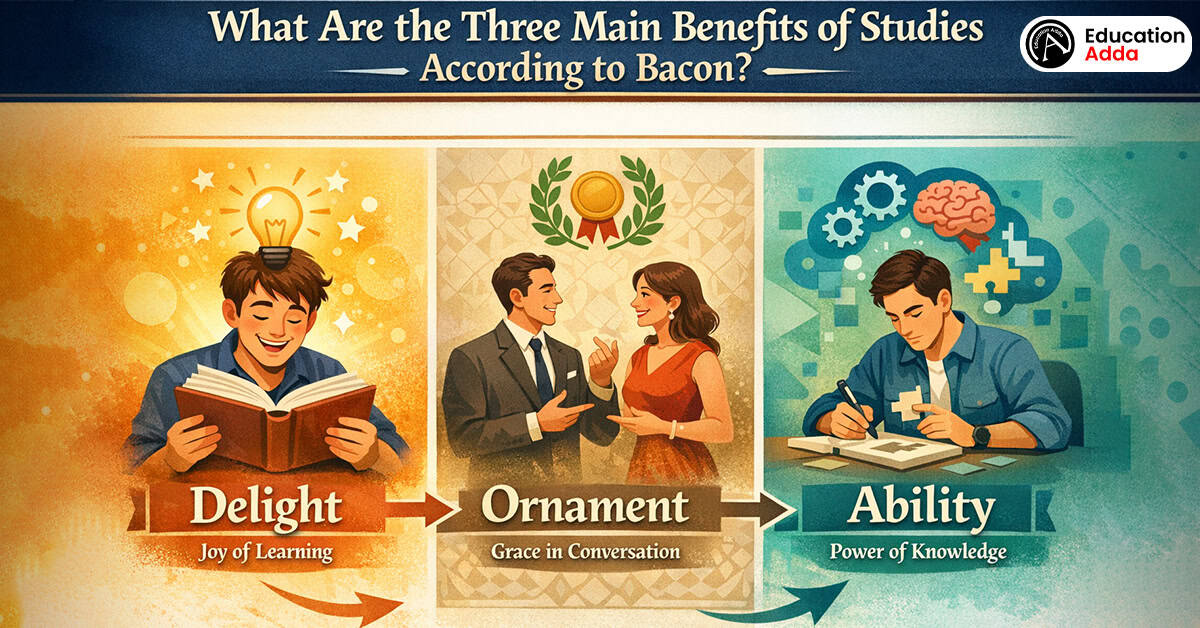
In the opening line of his essay, Francis Bacon immediately classifies the benefits of studies under three distinct categories. He asserts that studies serve three primary purposes: delight, ornament, and ability. This foundational concept is central to understanding the entire essay. Bacon isn’t just talking about academic learning; he’s outlining a complete philosophy for how knowledge enriches every aspect of a person’s life, from their private moments to their public interactions and professional decisions.
The three main purposes of studies provide a framework for a balanced intellectual life. According to Bacon, knowledge is not meant to be a sterile, isolated pursuit. Instead, the benefits of studies are realized when they are actively applied. The chief use of studies is to enhance our natural talents and guide our judgment, making us more effective and well-rounded individuals. Bacon’s pragmatic approach emphasizes that the true value of studies lies in their practical application in the real world.

1. Studies Serve for Delight

The first use of studies for delight refers to the personal joy and private pleasure one derives from learning. This is the intrinsic reward of knowledge, enjoyed in solitude and retirement (“privateness and retiring”). When a person reads for delight, they are not seeking external validation or a practical outcome; they are satisfying their own curiosity and finding companionship in ideas. Bacon explains that studies can be a source of comfort and entertainment, a perfect way to fill leisure time and enrich one’s inner world. This personal enrichment is the most fundamental of the three main purposes of studies.

2. Studies Serve for Ornament

The second use of studies is for ornament. This refers to the way knowledge enhances conversation and public discourse. A well-read person can articulate their thoughts more eloquently and engagingly, using their learning to beautify their speech. The use of studies for ornament is most evident in social settings, where a command of history, poetry, or philosophy can make one’s conversation more impressive and persuasive. However, Bacon offers a crucial warning: to use studies too much for ornament is affectation. Showing off one’s learning for the sake of vanity is pretentious and undermines the true purpose of knowledge.

3. Studies Serve for Ability

The third and most practical purpose is that studies serve for ability. This relates to the “judgment and disposition of business.” Knowledge equips a person with the skills needed for effective decision-making, planning, and executing tasks. A learned person can analyze situations with greater depth, drawing upon historical precedents, logical reasoning, and a broader understanding of human nature. While an unlearned man may manage daily affairs through common sense, the learned man brings a strategic and informed perspective, especially to complex matters. This demonstrates how studies help improve our capacity to navigate the world effectively.

How Do Studies Perfect Nature and How Are They Perfected by Experience?
One of the most insightful aphorisms in the essay is: “To spend too much time in studies is sloth; to use them too much for ornament, is affectation; to make judgment wholly by their rules, is the humor of a scholar.” Here, Bacon means that a balanced approach is essential. He then clarifies the relationship between innate talent, formal learning, and real-world practice with the line: “Natural abilities are like natural plants, that need pruning by study; and studies themselves do give forth directions too much at large, except they be bounded in by experience.”
 
This powerful metaphor explains that our inherent talents (natural abilities) are raw and untamed. Studies help to shape, refine, and “prune” these abilities, giving them direction and discipline. For example, a person with a natural talent for argument becomes a formidable debater by studying logic and rhetoric. However, academic learning alone is not enough. Studies can be too abstract and general. They are perfected by experience. It is only by applying what we learn in real-world situations that we can truly understand its nuances and limitations. A person who only reads about business but never runs one is just a theorist. Experience provides the context that makes knowledge truly useful.
Of Studies Questions and Answers – A Guide to Francis Bacon’s Views and Their Relevance Today

What Does Bacon Mean by "Tasted, Swallowed, and Chewed"?

According to Bacon, not all books deserve the same level of attention. He provides a brilliant classification to guide our reading habits: “Some books are to be tasted, others to be swallowed, and some few to be chewed and digested.” This metaphor advises readers on how to approach different types of texts to maximize efficiency and understanding. It is a timeless piece of advice on how to manage the overwhelming amount of information available to us.
This classification is a practical guide to intellectual triage. Bacon understood that one cannot read every book with the same intensity. To do so would be an inefficient use of studies. By categorizing books based on their value and purpose, he empowers the reader to allocate their time and mental energy wisely, ensuring that the most important works receive the deep, critical engagement they deserve.

Books to be Tasted

These are books that require only a cursory reading. You might read a chapter here or there, or simply skim the contents to get a general idea. These are books of lesser importance, and you only need a “taste” of them.

Books to be Swallowed

This category includes books that should be read completely but without requiring intense focus or deep analysis. These are books that are useful and informative but do not demand laborious study. You “swallow” them whole, absorbing the main points without getting bogged down in the details.

Books to be Chewed and Digested

This small, elite group consists of the most important books. These are the works that require your full attention and critical engagement. To “chew and digest” a book means to read it diligently, to think deeply about its arguments, to question its assumptions, and to integrate its wisdom into your own understanding. This is the most rewarding form of study, reserved for books of great substance.

How Do Studies Cure Defects of the Mind?

In one of the most remarkable sections of the essay, Bacon argues that specific studies cure specific mental weaknesses, much like physical exercises cure bodily diseases. He writes, “So if a man’s wit be wandering, let him study the mathematics.” This idea, that learning can be prescribed like medicine, was revolutionary. Bacon suggests that the mind is a muscle that can be trained and that various intellectual activities can correct its “infirmities.”
This concept of a “mental workout” is a testament to Bacon’s belief in the practical and therapeutic healing effect of studies. He posits that every defect of the mind may have a special receipt. For example, if a person has trouble distinguishing between things, they should study the lawyers’ cases and the Schoolmen, who are masters of subtle distinctions. This shows that the benefits of studies extend beyond mere knowledge acquisition to personal development and cognitive improvement.
Defect of the Mind
Appropriate Study (According to Bacon)
Why it Works
Wandering Mind / Lack of Focus
Mathematics
Mathematics requires absolute concentration and sustained logical reasoning.
Inability to Differentiate
Schoolmen / Lawyers’ Cases
These studies train the mind to make fine distinctions and analyze subtle differences.
Inability to Scan and Find Information
General Reading / Skimming
Practicing looking over various texts improves the ability to quickly locate relevant points.

Key Takeaways from "Of Studies"

  • Threefold Purpose: Studies serve for delight, for ornament, and for ability. A balanced intellectual life integrates all three.
  • The Golden Mean: Avoid extremes. Don’t study too much (sloth), show off too much (affectation), or rely only on books (impracticality).
  • Nature, Study, Experience: Natural abilities are raw potential. Studies prune and perfect them. Experience grounds and validates academic learning.
  • Strategic Reading: Not all books are equal. “Taste” some, “swallow” others, but “chew and digest” the truly important ones.
  • Knowledge as Medicine: Specific studies can be used to cure specific defects of the mind, strengthening your cognitive abilities.
  • The Complete Man: According to Bacon, “Reading maketh a full man; conference a ready man; and writing an exact man.” Engage in all three to become a well-rounded individual.

Of Studies Questions and Answers – A Guide to Francis Bacon’s Views and Their Relevance Today

Conclusion

Francis Bacon’s “Of Studies” remains a vital piece of wisdom for the modern age. It is not merely a textbook question for Class 11 English but a practical guide to a richer, more effective life. By understanding the core questions and answers within the essay, we learn that the true purpose of study is to balance personal joy, public grace, and practical skill. Bacon teaches us to be discerning readers, lifelong learners, and individuals who bridge the gap between theory and practice, ultimately using knowledge to perfect our nature.


External Links for Reference:

FAQ Section

Q1: What are the three main purposes or benefits of studies according to Francis Bacon?

The three main benefits are delight (personal joy in private), ornament (enhancing conversation and discourse), and ability (improving judgment and practical skills in business and life).

He means that knowledge enriches every part of life: it provides personal pleasure, makes one a more engaging conversationalist, and equips one with the skills for sound decision-making.

This is Bacon’s advice on how to read efficiently. “Tasted” books are skimmed, “swallowed” books are read through quickly, and books to be “chewed and digested” are studied deeply and critically.

Bacon says natural talents are like wild plants that need to be “pruned” (shaped and disciplined) by study. However, study alone is too abstract and must be “perfected” (validated and grounded) by real-world experience.

He warns that spending too much time in studies is sloth. It leads to laziness and a disconnect from the practical world. He advocates for a balance between learning and doing.


No tags found

Leave a Reply

Your email address will not be published. Required fields are marked *

Related Posts

Education Adda: The Leader in AMU/JMI Coaching. For three consecutive years, we’ve delivered exceptional results, making us the most trusted choice for aspiring medical and engineering students.

Our Newsletter