 Md Arshad
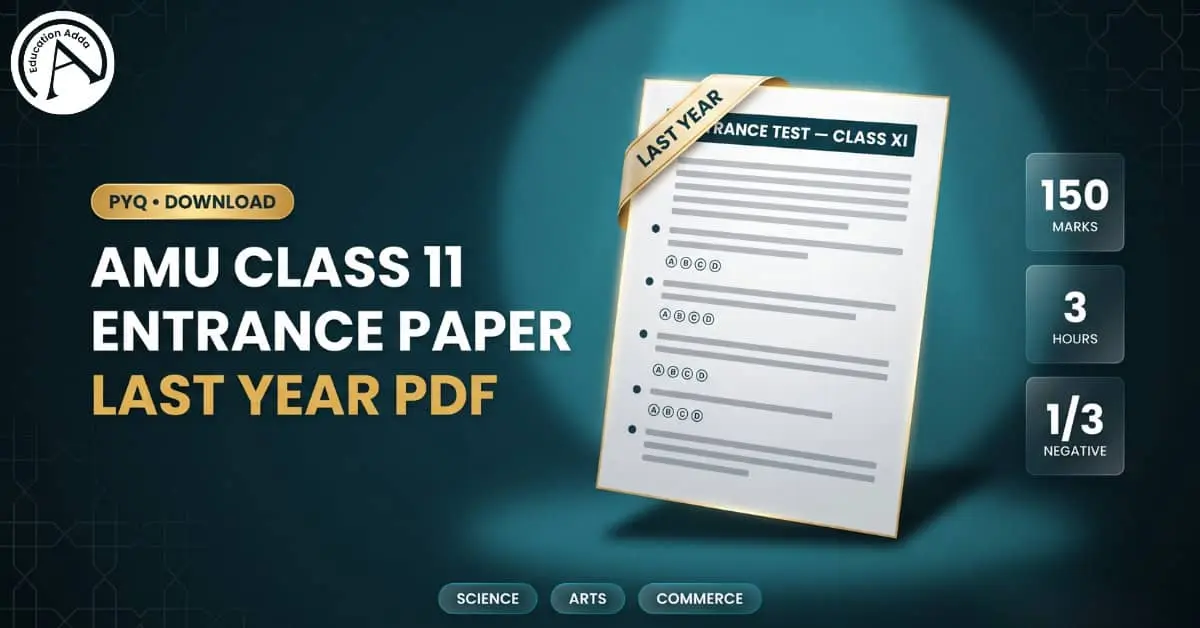
Searching for the AMU last year question paper of Class 11 Science is the smartest first step for students targeting admission through the AMU Class 11 entrance exam. Previous year papers (PYQs) reveal how questions are framed, what topics repeat, and how to balance speed and accuracy in a competitive entrance examination. This guide goes beyond simple downloads—it explains how to use PYQs to build readiness, avoid common mistakes, and improve your chances of success in upcoming examinations.
Table of Contents
Google AI Overview
AMU last year question paper of Class 11 Science helps candidates understand the exam pattern, difficulty level, and question format of the Entrance examination conducted by Aligarh Muslim University. Practising PYQs improves time management, identifies weak areas, and increases confidence before the real exam.
Why PYQs Matter for AMU Class 11 Science
Most students rely heavily on guidebooks, but previous year question paper analysis shows how AMU actually tests concepts. PYQs:
clarify types of questions (mostly MCQ),
indicate the trend of repeated chapters,
help candidates get familiar with negative marking policies (where applicable),
reduce anxiety by simulating the real exam.
Students who practise PYQs regularly perform better because they learn to manage time and avoid guesswork.
Free AMU & JMI Preparation Videos
AMU, JMI entrance exam preparation, previous-year paper solutions, syllabus explanation, admission updates aur mock interviews ke liye hamari complete playlist dekhein.
YouTube Playlist Dekhein Education Adda Subscribe KareinAbout the AMU Class 11 Science Entrance Exam
The AMU Class 11 entrance exam is conducted for admission to senior secondary schools under Aligarh Muslim University. The science stream typically includes questions from:
Physics
Chemistry
Biology
Mathematics
The exam is competitive, and selection depends on performance in the entrance test.
AMU Class 11 Entrance Exam Details (Science Stream)
| Exam Component | Details |
|---|---|
| Exam Name | AMU Class 11 Entrance Examination |
| Mode | Offline (OMR based) |
| Question Format | MCQ |
| Subjects | Physics, Chemistry, Mathematics / Biology |
| Negative Marking | Yes (usually applicable) |
| Difficulty Level | Moderate to Competitive |
| Syllabus Base | Class 9 and 10 |
| Admission Purpose | Senior Secondary School (Science) |
This overview clarifies the exam details often missing or outdated on other platforms.
Exam Pattern & Question Format
Understanding the exam pattern is essential before solving any papers PDF.
Typical features
Objective-type questions (MCQ)
Fixed duration
OMR-based answering
Focus on conceptual clarity from class 9 and 10
This format rewards speed and accuracy, not rote memorisation.
Syllabus Mapping Using Previous Year Papers
The official syllabus is broad, but science previous year papers narrow it down to what matters most.
Subject-wise focus
Physics: motion, work & energy, electricity
Chemistry: atoms, reactions, basic stoichiometry
Biology: cell structure, life processes
Mathematics: algebra, geometry, equations, trigonometry
Mapping PYQs with the NCERT syllabus helps candidates prioritise high-yield topics.
Subject-Wise Trend Analysis (Science Stream)
| Subject | Common Topics | Difficulty |
|---|---|---|
| Physics | Motion, Laws, Numericals | Moderate |
| Chemistry | Atomic structure, Reactions | Easy–Moderate |
| Biology | Cell, Human systems | Moderate |
| Mathematics | Algebra, Geometry | Moderate |
These trends show AMU’s preference for concept-based questions rather than tricky calculations.
Subject-Wise Analysis of AMU Class 11 Science Question Paper
Physics Previous Year Questions
Physics questions emphasize concept clarity, numerical application, and understanding of laws. Topics like motion, work-energy, and basic electricity are frequently repeated.
Focus on speed, equations, and units
Practice MCQs under time management
Analyze difficulty level per year
Chemistry Previous Year Questions
Chemistry blends theory + application, especially from atomic structure and basic organic chemistry.
Revise concepts regularly
Focus on reaction-based MCQs
Use PYQs to improve readiness
Biology / ➗ Mathematics Previous Year Questions
Biology stresses NCERT-aligned understanding, while Mathematics focuses on algebra, geometry, trigonometry, area, and equations.
Biology: diagrams, definitions, application
Mathematics: logic, calculation, game balance between speed and accuracy
How to Use AMU Class 11 Science PYQs Effectively
A previous year question paper is valuable only when used correctly.
Step-by-step
Download a clean PDF (year-wise).
Attempt the paper like a real entrance exam (timed).
Check answers with an answer key.
Note mistakes and revise concepts.
Re-attempt after 7–10 days.
This cycle builds readiness and improves speed and accuracy.
Where to Download AMU Class 11 Science Question Papers (Safely)
When students download AMU papers:
prefer official portals or reputed education sites,
avoid low-quality scans,
ensure the file is class 11 science question paper, not mixed streams.
Using free download as PDF file from trusted sources saves time and improves focus.
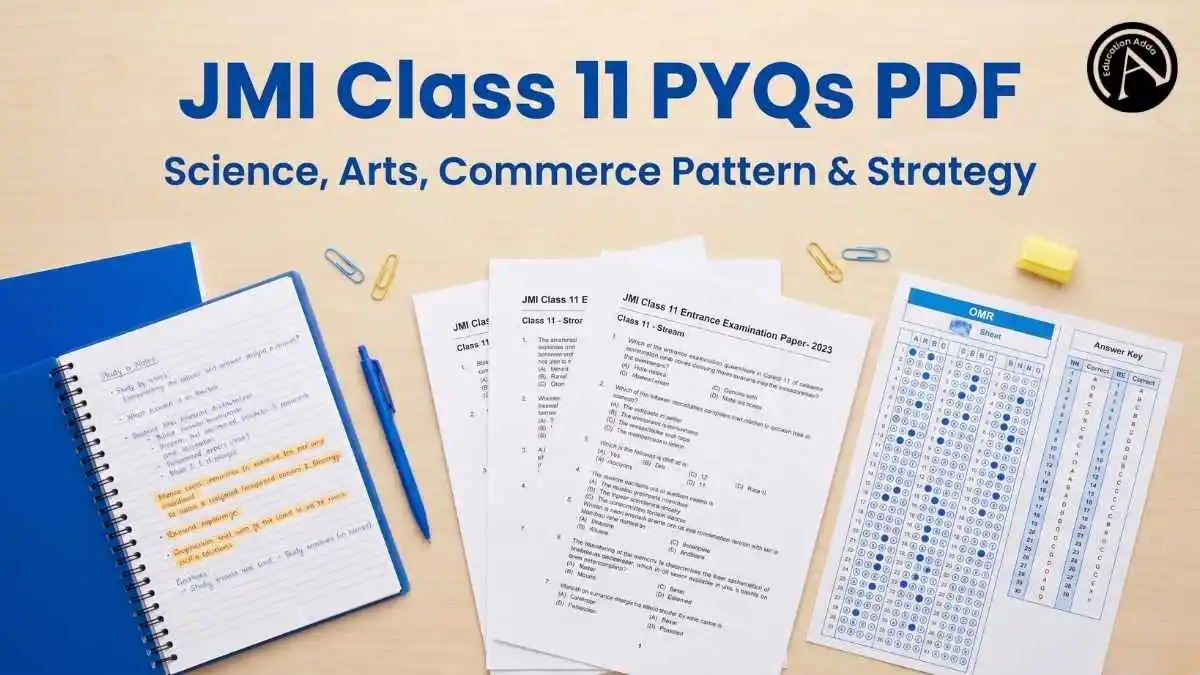
Download AMU Last Year Question Paper of Class 11 Science (PDF)
Candidates can free download as PDF file from trusted and verified sources. Always prefer official or archival links for accuracy.
Trusted External Sources
AMU Controller of Exams (Official):
https://www.amu.ac.inAMU Results Portal (PDF archive):
https://results.amucontrollerexams.com
Internal Resource (Preparation Hub)
Education Adda India – AMU Guides & PYQs:
https://educationaddaindia.com
💡 Tip: Always download the AMU previous year question paper in PDF format to preserve the original question format and marking scheme.


Exam Pattern & Question Trends (Based on PYQs)
| Aspect | Observed Trend |
|---|---|
| Repeated Topics | High (especially Physics & Maths) |
| Conceptual Questions | Increasing |
| Direct Formula MCQs | Moderate |
| Negative Marking Impact | High |
| Overall Trend | Concept-driven |
Understanding this trend gives candidates a competitive edge.
How to Use AMU Class 11 Sample Papers Effectively
Simply solving papers is not enough. Solving AMU Class 11 papers requires analysis.
Smart Strategy
Start with previous year entrance papers
Solve under real exam conditions
Check with answer key
Identify weak areas
Practice again
This method significantly improves chances of success.
Preparation Tips for 2025–26 (Based on PYQs)
Finish the syllabus before heavy testing.
Practise PYQs weekly.
Focus on weak areas identified through analysis.
Avoid blind guessing due to negative marking.
Revise formulas and concepts daily.
These preparation tips align closely with what is asked in the AMU entrance.
PYQs vs Sample Papers: What to Use First?
PYQs → understand real exam pattern.
Sample papers → test readiness and revision.
The best strategy is to start with previous year papers, then move to AMU class 11 sample papers.
Trusted References
Official AMU school pages for study material and notifications
National Council of Educational Research and Training syllabus frameworks
Reputed education portals hosting PYQs
FAQs – AMU Last Year Question Paper of Class 11 Sscience
Where can I find AMU Class 11 sample papers for 2026?
On official AMU portals and trusted education platforms like Education Adda India.
Is the AMU entrance exam tough?
The difficulty level is moderate, but competition is high.
Can solving previous year questions (PYQs) improve my score?
Yes. PYQs directly improve speed, accuracy, and confidence.
What type of questions are asked?
Objective MCQs based on Class 9 and 10 concepts.
Is AMU better than IIT?
They serve different purposes. AMU is a central university; IITs focus on engineering excellence.
How to study for the AMU entrance exam?
Complete syllabus, practise PYQs, revise weak areas, and re-test.
Do AMU Class 11 sample papers include PYQs?
Some do; always verify the year and source.
Can solving PYQs improve my score?
Yes—PYQs are one of the most effective tools for improvement.
Conclusion
The AMU last year question paper of Class 11 Science is the most reliable preparation resource. When combined with syllabus mapping, timed practice, and revision, PYQs significantly improve exam readiness and chances of admission.
Key Takeaways
PYQs reveal the exam pattern
Focus on concepts, not memorisation
Practise under timed conditions
Track and fix weak areas
Consistency builds confidence