 Md Arshad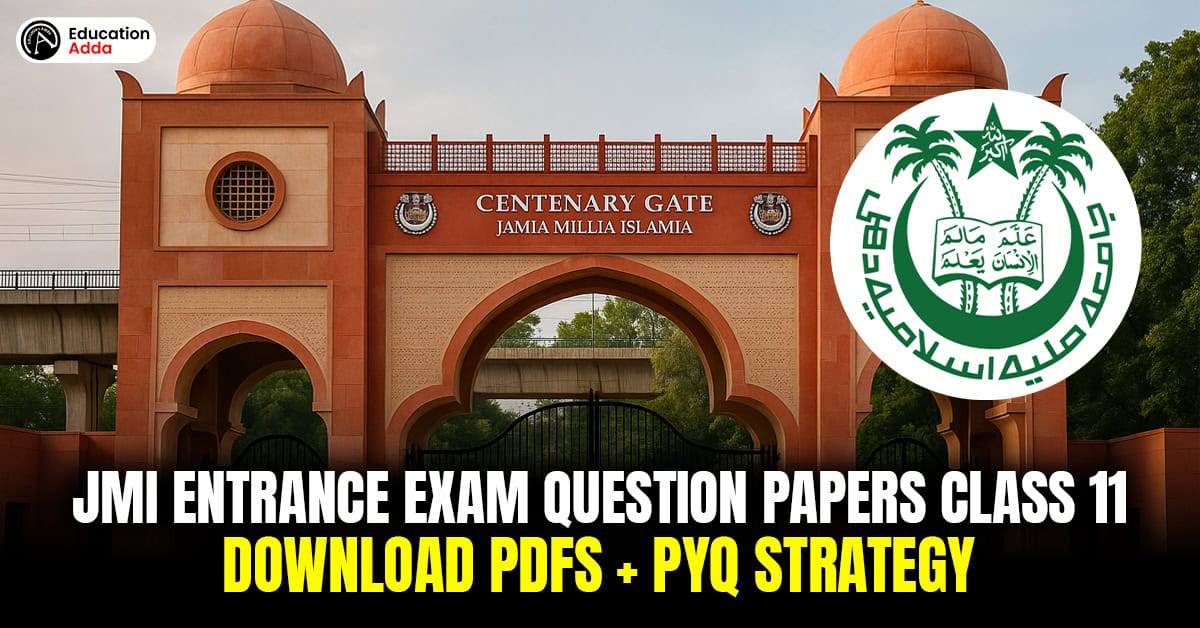
Jamia Millia Islamia Entrance Exam Question Papers Class 11
Parents and students searching for jamia millia islamia entrance exam question papers class 11 usually want two things: (1) a trusted question paper pdf download path, and (2) a clear plan to use previous year test papers for the entrance exam. This guide solves both—without confusion—by combining official updates, safe download advice, and a stream-wise strategy for 11th science, Arts, and Commerce.
It also fills the gaps seen in many top-ranking pages (random PDF dumps, unclear syllabus, no exam-day strategy, outdated details, and weak trust signals). Where facts can change (dates, centres, rules), students should treat the official notification as the final word.
Table of Contents
Google AI Overviews
Jamia Millia Islamia Class 11 entrance test preparation improves fastest when candidates solve previous year question papers in pdf format under timed conditions, track weak areas, and revise using NCERT/CBSE Class X concepts. Use trusted sources (official notice/CoE + reputable paper archives) and verify each year’s exam pattern, syllabus, and cutoff before final revision.
Key takeaways
PYQs reveal question types, speed needs, and repeated topics.
For Class XI, the application window and rules must be checked on the official notice.
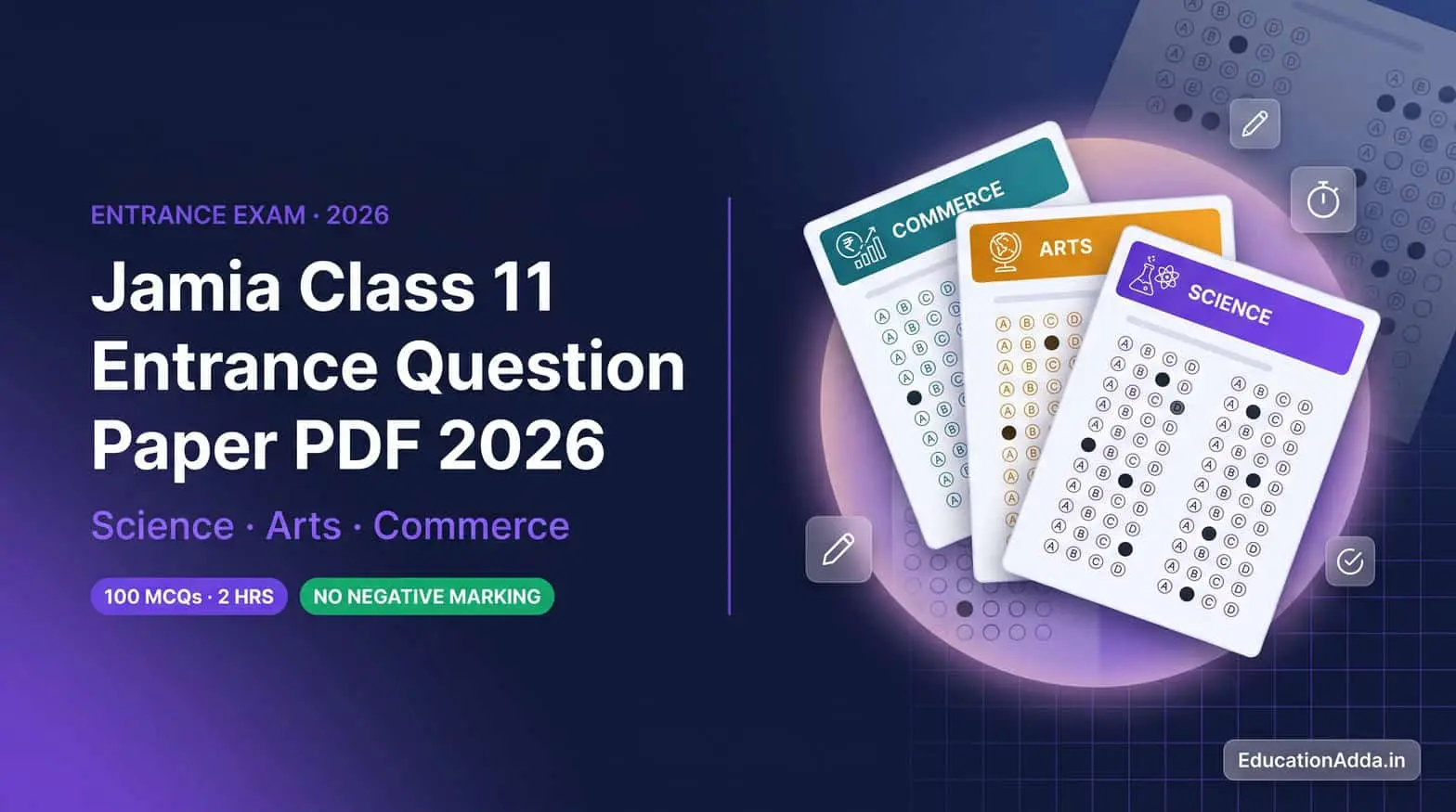
Science papers are commonly treated as 100 MCQs / 100 marks with no negative marking on several archives; verify the latest prospectus/notice.
Arts and Commerce papers are also linked across year-wise archives, often mapped to CBSE/NCERT Class X base.

AMU Distance Education 2026: Admission, Last Date, Courses List, Fees, Eligibility
Quick table: What students actually need (in one view)
The Jamia school Class XI entrance exam is a screening test used for admission in selected schools/streams. Students who solve previous year question papers consistently develop confidence because the question format and topic mix become predictable.
PYQs matter because they convert preparation into measurable actions: accuracy, speed, and revision priorities. Instead of guessing what might come, students see what actually came in the previous year paper and in the “years papers” set.
Latest official updates (freshness for 2026 + reference to 2025)
2026 admission window (official notice)
For Jamia schools, the official notice provides the application form availability and the last date for submission for Class XI (and other classes). Students should always confirm their specific school/stream in the notice.
2025 reference (official)
Jamia also publishes official press notes and prospectus updates for school admissions (session-wise). These help validate that candidates are not relying on outdated PDFs.
Practical rule: If a PDF list page does not mention the current session notice, treat it as a “practice archive,” not as the authority for dates/rules.
Jamia class 11 entrance question paper in PDF: safe download workflow
Students searching jamia class 11 entrance question paper in pdf often download files from risky sources. A safer workflow looks like this:
Check official notice first (dates, classes, schools).
Choose a trusted archive page for practice PDFs (Science/Arts/Commerce).
Save each question paper in a folder:
JMI_Class11_PYQs > Science/Arts/Commerce > Year.Maintain a simple log: score, time taken, mistakes, revision topic.
Mini infographic (PYQ-to-score loop)
Download → Timed solve → Error log → Topic revise → Re-solve → Mock test
Stream-wise PYQ roadmap (Science, Arts, Commerce)
1) Class 11 Science (11th science / science entrance)
Science candidates should treat PYQs like a diagnostic tool: identify repeated sections and fix weak areas with short revision sprints. Some archives describe Science as 100 questions / 100 marks and mention no negative marking, but candidates should verify the latest session rules.
The syllabus base is commonly mapped to CBSE/NCERT Class X, so the most practical approach is: NCERT basics + PYQ practice + timed mocks.
2) Jamia Class 11 Arts entrance question paper
Arts aspirants typically benefit from consistent daily practice rather than one-time long sessions. Use a fixed schedule: 45 minutes timed solve + 30 minutes review + 20 minutes revision notes.
Arts paper archives and guides frequently connect the prep base to Class X-level concepts and school-level reasoning/English practice. Students should still cross-check the exam notice for the current year.
3) Commerce entrance
Commerce candidates should build speed in calculations and accuracy in reading-based questions. Practice should rotate: quantitative basics → reasoning → English comprehension.
Year-wise Commerce entrance paper archives are available on several question paper pages; use them as timed practice sets, not as “final rulebooks.”
Exam pattern (what most PYQ archives show—and how to verify)
A strong preparation guide must be honest: the “pattern” written on non-official websites can be correct for many years, but rules can change. Still, several popular archives consistently mention:
Objective-type questions (MCQ)
Around 100 questions / 100 marks
Often “no negative marking”
These details appear in Science paper archives and year-wise test paper listings, but candidates should validate the latest notice/prospectus for the session.
Verification tip: When an archive cites an official source (CoE/notice), it is stronger than a PDF-only post with no source trail.
Syllabus (how to understand it without confusion)
Most Class XI school entrance prep guidance aligns the foundation with NCERT/CBSE Class X, which makes sense because the entrance test checks readiness for higher secondary study, not Class XI board content.
Students should build a “syllabus map” from PYQs:
List topics that repeat across previous year papers
Tag each topic as Strong / Medium / Weak
Revise weak topics first, then re-attempt the same year paper
For “official syllabus” details, candidates should rely on the current session documents and official portals.
Cutoff, result, answer key: what families should know
Many families search cutoff early, but cutoff shifts by school, stream, and seats. Some archives publish historical cutoff snapshots (example: a year-wise list for Science) which can help set realistic expectations, but they are not a promise for the next year.
Where to look for official-style updates
Result and exam updates typically appear via official Jamia portals and notices.
If an “answer key” is released, students should use it for learning (error analysis), not for arguments about marks.
How to use PYQs effectively (the method that beats random practice)
The “3-round solve” method
Round 1: Solve as a diagnostic (no pressure) → note weak areas
Round 2: Timed solve (real exam speed) → track time management
Round 3: Accuracy solve (target 90%+ correct) → remove careless mistakes
This is the simplest SXO-friendly method because it gives clarity: what to do today, and what to improve tomorrow.
Time management rules that work
Keep a strict per-section time limit
Skip and return (don’t get stuck)
Maintain an error notebook (top 30 mistakes)
Books & Guides (recommended, but not overhyped)
Students who want a structured book instead of scattered PDFs should pick a guide that is:
Year-wise + subject-wise
Focused on PYQs, not filler theory
Includes quick practice sets (DPP style)
Education Adda’s PYQ book “Entrance Key” is positioned as a subject-wise, year-based practice system built from 10+ years of previous papers and DPP-style drills—useful for students who want one organized workflow instead of multiple random PDFs. (Best used alongside NCERT revision and timed mocks.)



Best Direction to Study for Competitive Exams: Vastu Tips for Success
Conclusion
The smartest way to prepare for Jamia Class 11 is simple: use the official notice for dates and rules, then solve previous year question papers pdf in a timed routine, analyze mistakes, and revise weak topics using NCERT/CBSE Class X basics. This approach improves speed, accuracy, and confidence—without wasting time on unreliable paper dumps.
FAQs
Where can students download JMI previous year entrance exam papers for free?
Use official portals for notices and trusted archives for practice PDFs; always verify the year and stream.
Is solving previous year papers enough to crack the entrance test?
PYQs help most when paired with timed practice and NCERT revision; “solve + review + revise” beats “solve only.”
What is the exam pattern for the JMI entrance test (Class 11)?
Several archives mention objective questions and 100-mark style sets, but candidates must confirm the latest session rules via official documents.
Is there negative marking?
Some year-wise listings state no negative marking, but the final rule is always the official notice/prospectus for the session
Does this cover “jamia millia islamia entrance exam question papers class 11”?
Yes, this guide covers the same intent (Class 11 entrance PYQs and download strategy); the wording is often a typo variation.
Bullet Summary: Most Important Things to Remember
Use the official notice for dates and rules (freshness matters).
Use PYQs for speed + accuracy + confidence, not only “reading.”
Keep papers organized by stream and year (Science/Arts/Commerce).
Follow the loop: Timed solve → error log → revise → re-solve.
Treat cutoff and pattern claims on non-official pages as “practice guidance,” not final authority.