 sarfarosheamanager
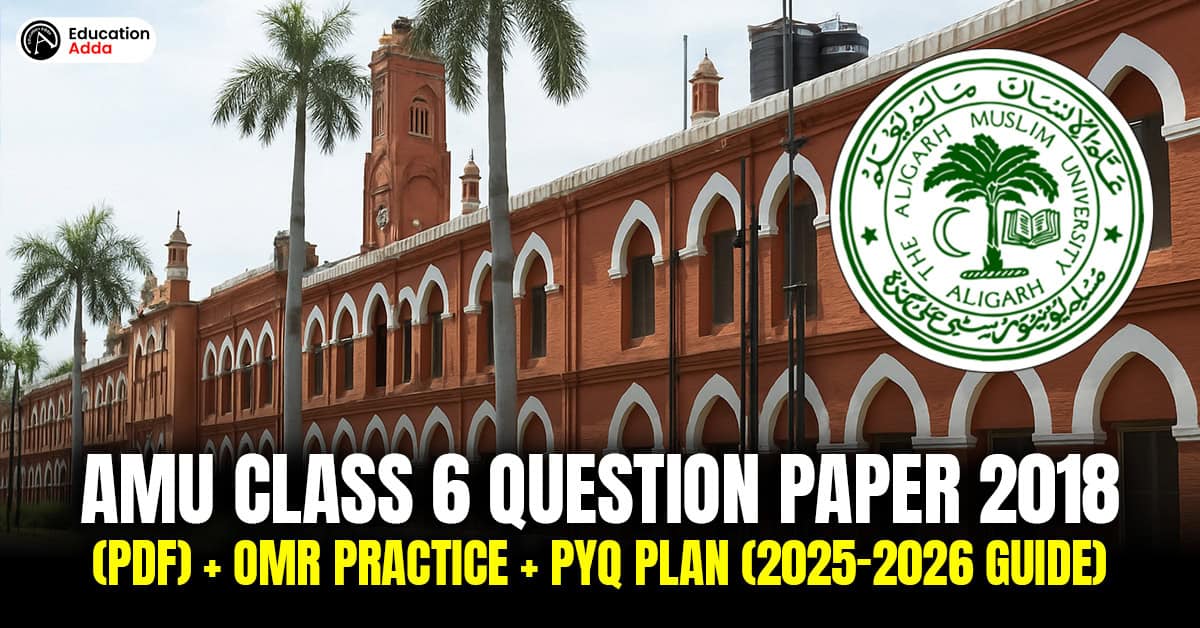
AMU Class 6 Entrance Paper 2019
Looking for the AMU Class 6 entrance paper 2019 (also searched as amu class 6 entrance question paper 2019 and amu class 6 entrance previous year paper) and a complete, reliable guide that actually helps with preparation? This page is built for that exact purpose: it explains what the 2019 paper looked like, how the entrance exam is structured, how the interview works, what the official syllabus is, and how a student can solve PYQs the right way—without getting trapped in outdated or incomplete info.
The goal is simple: make it easy for a Class 6 entrance candidate to understand the paper, learn the exam pattern, and use previous year practice to improve score, accuracy, and real performance.
Table of Contents
Google AI Overviews-ready answer
AMU Class 6 Entrance Paper 2019 followed the AMU schools admission test format: Written Test (85 marks, MCQ/OMR) + Interview (15 marks). The written test had Section-I (Languages—English/Urdu/Hindi, 25 MCQ) and Section-II (Math 30 + Science/EVS 30, 60 MCQ). The syllabus matched CBSE/NCERT Class V. A key rule: the candidate needed minimum 40% in Section-I (Languages) to become eligible for interview/admission. The test date in 2019 was scheduled for 24-03-2019, duration 2 hours, start 10:00 AM.
Quick table: AMU Class 6 (Class VI) entrance exam structure (2019 official snapshot)
| Component | Details (2019) |
|---|---|
| Exam | AMU Class VI Admission Test |
| Total Merit | Written 85 + Interview 15 |
| Written Format | Objective MCQ (OMR style) |
| Section-I | Languages (English/Urdu/Hindi) 25 MCQ = 25 marks |
| Section-II | 60 MCQ = 60 marks (Math 30 + Science 30 in 2019 guide) |
| Must-score rule | Minimum 40% in Section-I to be eligible for interview/admission |
| Syllabus | CBSE/NCERT Class V (followed in University Schools) |
| Test date & time | 24-03-2019, 2 hours, 10:00 AM |
| Application last date | 16-02-2019 (without late fee); 22-02-2019 (with late fee) |
| Correction window | 23-02-2019 to 24-02-2019 |
| Fee | ₹450 (normal), ₹750 (late fee inclusive) |
All details above are taken from the official AMU Schools Admission Guide 2019–20.
What is AMU Class 6 admission test and why the 2019 paper still matters?
AMU schools pathway and selection
AMU (Aligarh Muslim University) runs school-level admissions through a structured admission test and merit-based process for certain classes, including Class VI. The selection for Class VI is not based only on a written exam; the final merit includes written test marks + interview marks, so preparation must cover both.
For students in India preparing for competitive school admission, a previous year question paper is often the fastest way to understand real difficulty level, question style, and the balance between Languages, Math, and EVS/Science. The 2019 paper is especially useful because it sits in the middle of the last-decade trend and still matches the core CBSE/NCERT foundation.
Why 2019 is still a high-value “practice paper”
Even when date, fee, or minor labels change, the backbone stays stable: MCQ format, OMR style, Class V syllabus, and the heavy weight of Section-II (60 marks). Most importantly, the Languages Section-I qualifying rule is a make-or-break filter. In the official 2019 guide, that 40% rule is clearly stated.
AMU Class 6 entrance paper 2019: exam pattern and marks (official)
Written test (85 marks): how the paper is built
In 2019, the written paper had two sections. Section-I was Languages (English/Urdu/Hindi) with 25 MCQ (1 mark each). Section-II had 60 MCQ (1 mark each) with subject split shown as Mathematics 30 and Science 30 in the 2019 guide.
The MCQ/OMR nature means speed matters, but accuracy matters more—because every wrong tick wastes time and confidence. A student who learns to avoid silly mistakes can improve faster than someone only chasing speed.
Interview (15 marks): the often-ignored scoring area
The interview was worth 15 marks, and the total merit was Written 85 + Interview 15. A strong written score helps a candidate get shortlisted, but the interview can decide the final rank among similarly scored students.
Also, in newer guides AMU explicitly notes an interview qualifying minimum (40% in interview for eligibility). That’s a reminder: treat interview prep seriously, not like a formality.
2019 admission details: age limit, date, fee, and key rules
Age limit (2019) and eligibility
For 2019, the official guide states the candidate must be 10 to 12 years as on March 31, 2019, with a specific date-of-birth range provided. This is not a “rough idea”—it’s a strict eligibility criterion.
That’s why every student should verify age and documents early. One small mismatch in a certificate can create last-minute stress during verification.
Dates and fee (2019): application + correction + exam schedule
In 2019, the last date without late fee was 16-02-2019, and with late fee 22-02-2019. The correction window was 23-02-2019 to 24-02-2019. The test was scheduled on 24-03-2019, duration 2 hours, start 10:00 AM.
Fees shown in the official guide: ₹450 (normal) and ₹750 (with late fee inclusive).
The 40% Languages rule (the most important rule students miss)
The 2019 guide clearly states: it is essential to obtain minimum 40% marks in Section-I to be eligible for interview/admission. In simple words: even if Math + EVS is strong, Languages cannot be ignored.
Syllabus: CBSE/NCERT Class V mapping (what to study)
AMU’s official guide ties the Class VI test syllabus to CBSE/NCERT Class V, followed in University Schools. That makes preparation cleaner: focus on Class V fundamentals instead of random “hard GK.”
For official NCERT textbook access, ePathshala is a trusted source.
Section-I (Languages): what usually appears
Languages MCQs often test grammar and usage more than long writing. Preparation should cover:
basic grammar (noun/pronoun/verb/adjective, tense, prepositions)
vocabulary and synonyms/antonyms
sentence correction and fill-in-the-blanks
short comprehension-type inference (where applicable)
Because of the 40% qualifying rule, daily language practice is the safest strategy.
Mathematics (30 marks): core scoring area
Math is predictable and scoring when Class V concepts are strong:
number system, factors/multiples
fractions/decimals
basic geometry, perimeter/area
unit conversion, time & money
word problems (speed comes from practice)
A student should aim for near-perfect accuracy in Math before trying to “solve faster.”
EVS/Science (30 marks): concept clarity beats cramming
In 2019 the guide labels it “Science 30”; in newer guides it is “Environmental Studies 30.” Either way, the syllabus base stays Class V level.
Typical coverage includes:
basic life science (plants/animals, health, hygiene)
earth/environment basics (water cycle, pollution, resources)
simple physics ideas (motion, magnets, light—foundation level)
everyday science + general awareness linked to syllabus
How to solve the AMU Class 6 entrance paper 2019 (2-hour strategy)
Time plan that fits OMR-style exams
A simple plan that works for most candidates:
First 15 minutes: Languages quick wins (easy grammar/vocab)
Next 55 minutes: Math (full focus, avoid guesswork)
Next 40 minutes: EVS/Science (steady pace)
Final 10 minutes: OMR cross-check (question number vs bubble)
OMR mistakes feel small but can reduce the score brutally. Train the hand to mark neatly and consistently.
Accuracy-first rule (before speed)
A strong benchmark: target 90%+ accuracy in practice sets before trying to increase speed. Speed without accuracy creates repeated errors and weak confidence. The exam rewards calm thinking more than rushing.
PYQ strategy: previous 3 years → higher selection chance (repeatable system)
The weekly system (works for 2019 paper + other previous year papers)
Week 1: attempt 2019 paper as a full test
Week 2: attempt another previous year paper
Week 3: attempt another paper
Then cycle back and reattempt 2019 after corrections.
This approach improves performance faster than only reading theory, because it builds exam temperament.
Error sheet method (the “hidden topper habit”)
After each test, create an error sheet:
topic (e.g., fractions / verbs / EVS)
mistake reason (concept gap vs hurry vs confusion)
what to revise in NCERT Class V
a mini drill of 10 questions on that topic
That’s how a student converts mistakes into marks.


AMU Class 11 Entrance Exam Sample Papers: Your Ultimate Guide to Success
Latest “freshness” update: what changed after 2019 (2025–2026 data)
Students often practice 2019 papers but appear for a recent exam cycle. So it’s smart to track what’s updated.
2019 vs 2025 vs 2026 (key differences table)
| Year guide | Test schedule | Fee (normal / late) | Section-II naming | Notes |
|---|---|---|---|---|
| 2019 | 24-03-2019, 2 hrs, 10:00 AM | ₹450 / ₹750 | Math 30 + Science 30 | 40% Languages rule |
| 2025 | 11-05-2025, 2 hrs, 4:00 PM | ₹750 / ₹1050 | Math 30 + Environmental Studies 30 | Class V CBSE/NCERT |
| 2026 | 05-04-2026, 2 hrs, 4:00 PM | ₹800 / ₹1100 | Math 30 + Environmental Studies 30 | Interview qualifying noted |
Takeaway: The backbone stays stable (85+15, 25+60 MCQ, Class V syllabus), but date/time and fee change, and EVS naming is clearer in newer guides.
Where to download safely (and avoid wrong “paper pdf” files)
Best trust sources (recommended)
For official rules, always prioritize:
AMU Controller of Exams pages and official admission guides
Official AMU ecosystem links surfaced by known admission pages (forms/portals)
NCERT textbooks from ePathshala for syllabus-aligned study
About third-party “previous year papers”
Third-party repositories (including document platforms) can help access a “previous year question paper,” but they may have:
missing pages, wrong year labeling, or mixed-language versions
incomplete answer keys
repackaged “question bank” PDFs
So the safest method is: use third-party papers for practice, but cross-check pattern + rules with the official guide.
Conclusion
The AMU Class 6 entrance paper 2019 is a powerful preparation tool when used with the official exam pattern, the CBSE/NCERT Class V syllabus, and a disciplined PYQ strategy. The biggest winning rule is simple: don’t ignore Languages—the 40% Section-I criterion can decide eligibility. Combine accuracy-first practice with a smart error-sheet system, and the previous year paper becomes a clear roadmap to better selection odds.
Bullet summary: most important things to remember
AMU Class VI merit = Written 85 + Interview 15
Paper has Section-I Languages (25) + Section-II (60)
40% minimum in Languages is essential for eligibility
Syllabus = CBSE/NCERT Class V
2019 test was 24-03-2019, 10:00 AM, 2 hours
Dates/fees change yearly—cross-check 2025/2026 guides for freshness
Best prep = timed tests + error sheet + NCERT revision + retest loop
Trusted external links
(These will open via the citation links.)
AMU Controller of Exams (official admissions & notices)
Official AMU Schools admission guide 2019–20 (Class VI details)
Official AMU Schools admission guide 2025–26 (freshness check)
Official AMU Schools admission guide 2026–27 (latest dates/fees pattern)
NCERT ePathshala (Class V textbooks)
FAQs
What is the age limit for AMU Class 6 entrance exam (2019 reference)?
The 2019 guide states candidates must be 10–12 years as on March 31, 2019, with a defined date-of-birth window. Always verify exact DOB range in the official guide for the year of application.
What is the exam pattern of AMU Class 6 entrance paper 2019?
Written test 85 marks (MCQ/OMR) + Interview 15. Written includes Languages 25 MCQ and Section-II 60 MCQ (Math 30 + Science/EVS 30).
Is there a minimum qualifying rule in the Languages section?
Yes. The official 2019 guide requires minimum 40% in Section-I (Languages) to be eligible for interview/admission.
What syllabus should a student follow for AMU Class 6 entrance?
AMU ties the syllabus to CBSE/NCERT Class V followed in University Schools. NCERT ePathshala can be used for official textbooks.
How should a student use the AMU Class 6 entrance question paper 2019 for preparation?
Use it as a timed 2-hour test, build an error sheet, revise weak NCERT Class V chapters, and re-test after 7–10 days. Keep Languages daily due to the 40% rule.