 sarfarosheamanager
Complete Guide for AMU Class 6 Question Paper
Parents and students in India searching for an amu 6th class question paper usually want three things fast: (1) the real exam pattern, (2) the exact syllabus to study, and (3) a clean way to practice years papers without confusion, scams, or low-quality PDFs.
This guide fixes what most pages miss: it combines the latest official admission details for 2026, a clear breakdown of the paper structure, a practical previous 3 years strategy, and a “download + privacy” checklist that keeps students safe while collecting the right information.
Note on official PDFs: the PDF screenshot-rendering failed due to a validation error in the browsing tool, so the guide uses the extracted text from official documents for accuracy.
Table of Contents
Google AI Overviews (AIO) Style Summary: Quick Answer Box
What is the AMU Class 6 entrance exam pattern (2026)?
Written test: 85 marks (MCQ/OMR) + Interview: 15
Section-I (Languages): English/Urdu/Hindi — 25 MCQ
Section-II: Math 30 + EVS 30 — 60 MCQ
Rule: Must score 40% in Section-I (Languages)
Syllabus: CBSE/NCERT Class V
When is the test (2026)?
Apply by 15-02-2026 (late fee till 22-02-2026)
Correction window 25-02-2026 to 28-02-2026
Test: 05-04-2026 | 2 hours | 4:00 PM
AMU Class 6 Admission 2026: Important Dates & Detail Students Must Check
The most important detail parents overlook is timing. If the application is late, families lose the best chance of appearing in the entrance exam comfortably. In the official school admissions guide for 2026–27, the window is clearly listed with a normal last date plus a late-fee extension and a correction period.
Just as important: the Class VI eligibility is tied to age. The official document mentions the age range and the cut-off date basis, so students should verify it before they plan any test strategy. This keeps preparation realistic and avoids last-minute surprises.
Important Dates Table (Admission 2026)
| Item | Date / Window |
|---|---|
| Last date to apply | 15-02-2026 |
| Late fee till | 22-02-2026 |
| Correction window | 25-02-2026 to 28-02-2026 |
| Entrance exam date & time | 05-04-2026, 4:00 PM |
| Test duration | 2 hours |
Source: Official AMU school admissions guide.
AMU Class 6 Entrance Exam Paper Pattern: Question Paper Structure + Rule That Decides Selection
The question paper is designed to test basic language readiness plus foundational Math and Environmental Studies. The written paper carries 85 marks, and the interview adds 15 marks in the final evaluation.
The high-impact rule is the 40% requirement in Section-I (Languages). A student can be strong in Math or EVS, but still lose the advantage if Languages performance drops below the required threshold. This is why daily language practice is not optional—it’s a selection filter.
Exam Pattern Snapshot (2026)
| Component | MCQs | Marks |
|---|---|---|
| Section-I: Languages (English/Urdu/Hindi) | 25 | Part of 85 |
| Section-II: Math (30) + EVS (30) | 60 | Part of 85 |
| Written Total | 85 | 85 |
| Interview | — | 15 |
Source: Official AMU school admissions guide.



AMU Distance Education 2026: Admission, Last Date, Courses List, Fees, Eligibility
AMU 6th Class Question Paper 2019: What the 2019 Test Shows About Real Difficulty
A smart way to understand the amu 6th class question paper style is to look at older official snapshots. For example, the 2019 guide shows the same written+interview structure and the same two-section design, with languages + Math + EVS and the 40% language rule.
It also lists the 2019 test schedule (date, duration, time). This matters because families often search “amu 6th class question paper” when they actually need a paper pattern confirmation and a planning anchor.
Test (2019): 24-03-2019 | 2 hours | 10:00 AM
Syllabus for AMU Class 6 Entrance Exam: CBSE/NCERT Class V List Students Should Follow
The official guide states the syllabus standard clearly: CBSE/NCERT Class V. That one line saves weeks of wasted effort. Students who jump to Class VI books too early often lose accuracy in basic Arithmetic, grammar, and EVS fundamentals.
Subject-Wise Syllabus Map (Class V Standard)
Languages (English / Urdu / Hindi)
Reading comprehension (short passages)
Basic grammar: nouns, verbs, tenses, punctuation, sentence correction
Vocabulary and usage (everyday level)
Include a small daily block for English language rules even if the student prefers Urdu or Hindi, because Section-I performance is gatekeeping.
Math (Class V – NCERT)
Number system, factors/multiples, fractions/decimals
Basic algebra ideas (simple patterns), geometry basics, measurement
Word problems for speed + accuracy
EVS (Class V – NCERT)
Family/society, basic science/environment, civics awareness
Maps/basic places, simple observation-based questions
AMU Class 6 Question Paper PDF Download: Safe Sources, “Free” Traps, and Privacy Checklist
Many students search amu 6th class entrance question paper pdf download and end up on random file-sharing pages. Some are okay, some are not. The safest approach is to prioritize official sources and reputable test platforms, then verify file quality before printing.
Safety checklist (quick):
Avoid unknown links asking for phone access or forced signups
Don’t share OTPs; protect privacy and personal information
Don’t pay cash to “agents” promising guaranteed admission
Prefer official uploads and known practice platforms
Official school admissions pages also host related official materials (like answer keys), which improves trust and reduces the risk of mismatched patterns.
Previous 3 Years + Years Papers (2015–2024): How Students Should Use PYQ, Solved Papers, and Unsolved Papers
Most competitors list “years papers” but don’t explain how to extract benefit from them. A student improves fastest when each paper becomes a feedback loop.
Unsolved papers build exam stamina and time sense.
Solved papers (or a verified answer key) reveal conceptual gaps.
A proper solution notebook prevents repeating mistakes.
Platforms like KnowledgeCubs and MyCBSEGuide focus heavily on providing practice tests or links, but often don’t provide a structured method to convert practice into measurable improvement (error-sheet system, retest intervals, language-rule handling).
Mini Table: What to Track While Solving Papers
| What to track | Why it matters |
|---|---|
| Accuracy by section | Confirms if Languages is crossing 40% rule |
| Time per 10 questions | Builds speed without panic |
| Mistake reason | Concept gap vs silly error |
| Retest score | Confirms learning is locked |
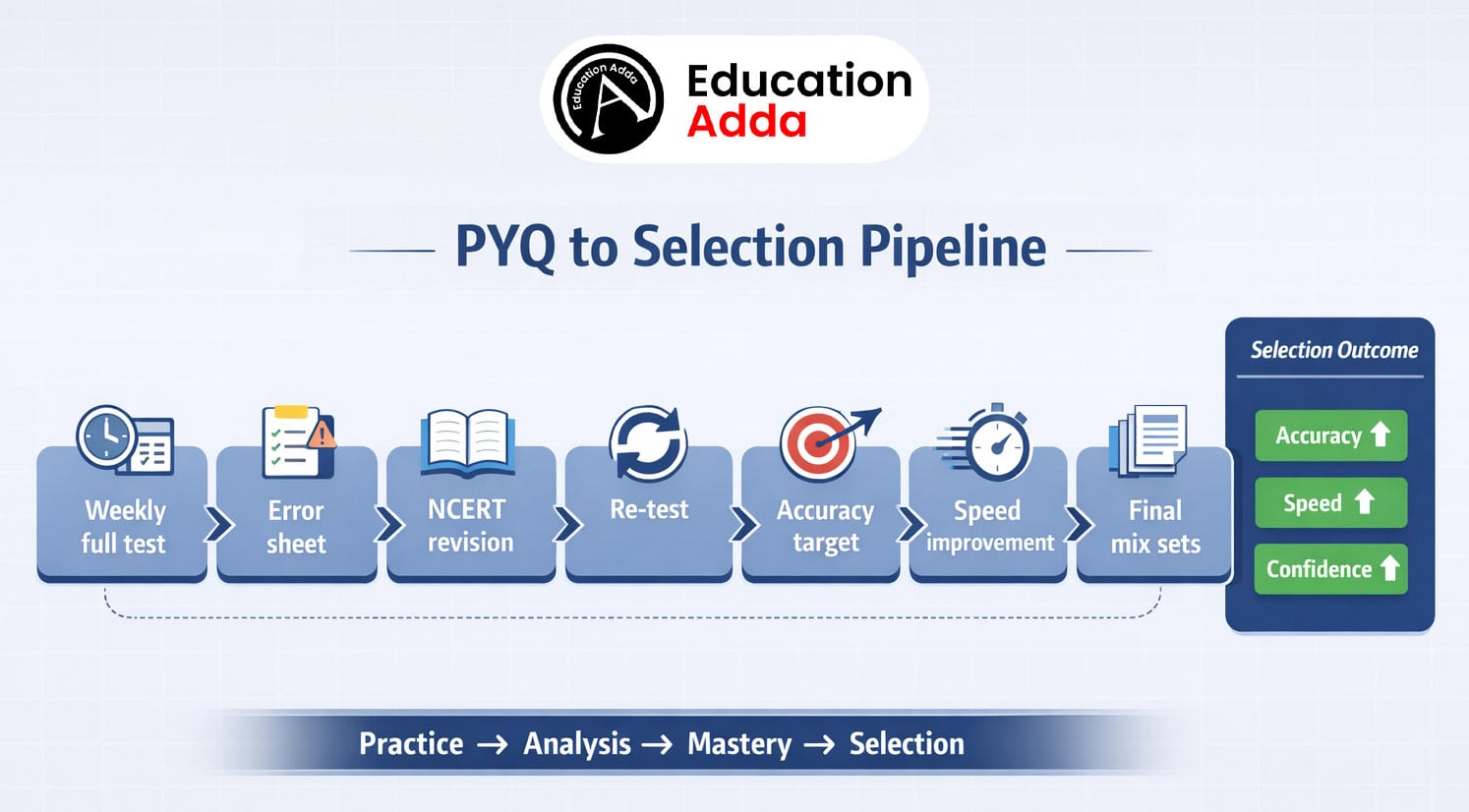
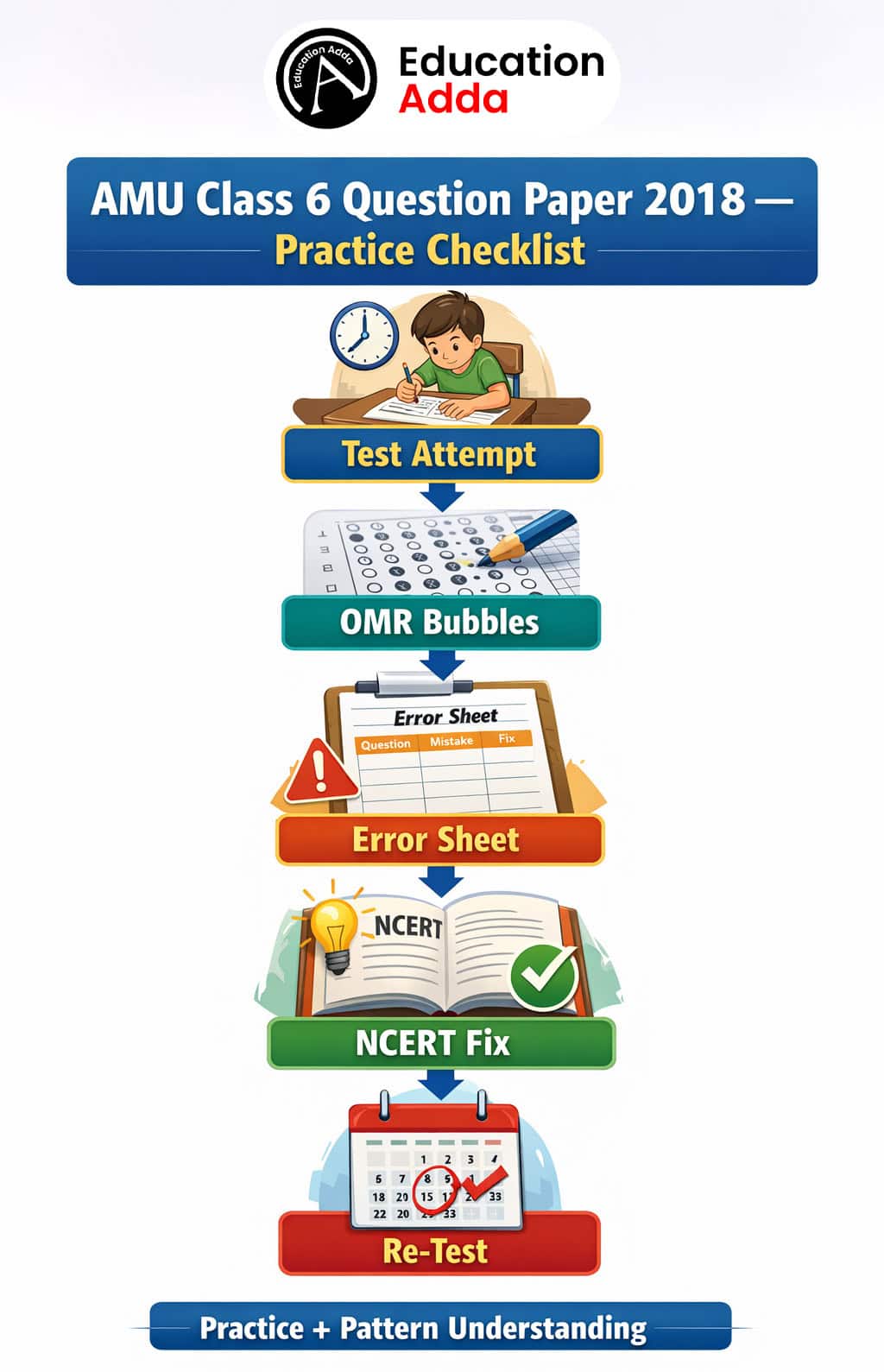
PYQ Strategy That Works: A Simple 7-Step Plan (Previous 3 Years → Better Selection)
This workflow matches how toppers practice without burnout:
One full test every week (2 hours, OMR style)
Make an error sheet (topic + mistake reason)
Fix with NCERT Class V chapter revision
Re-test the same paper after 7–10 days
Target 90%+ accuracy before increasing speed
Languages daily (because Section-I has 40% rule)
Final 14 days: mix papers + mixed-topic mini tests
This is also the cleanest way to build time management while keeping the real exam pattern intact.



Best Direction to Study for Competitive Exams: Vastu Tips for Success
Trusted External References Students Can Verify
Use these as “source of truth” when cross-checking:
Official AMU Controller of Examinations school admission pages and guide PDFs (dates, pattern, answer key notices).
NCERT/CBSE Class V syllabus/books for preparation alignment.
NIRF 2025 report shows Aligarh Muslim University’s visibility in national rankings (useful as a credibility reference in YMYL education content).
Internal Linking Suggestions for EducationAddaIndia
To strengthen site architecture + indexing efficiency, place internal links naturally in these sections:
From “Exam Pattern” → link to your AMU exam pattern or entrance exam guide post
From “Syllabus” → link to NCERT Class V notes / English grammar basics
From “PYQ Strategy” → link to your AMU previous year question paper hub page
From “Admission 2025/2026 dates” → link to your AMU admission updates category
Copy-ready internal link placeholders (edit to match your exact URLs):
https://educationaddaindia.com/amu-class-6-admission-2026/
https://educationaddaindia.com/amu-class-6-entrance-exam-pattern/
https://educationaddaindia.com/amu-class-6-syllabus-ncert-class-5/
https://educationaddaindia.com/amu-class-6-previous-year-question-paper/
https://educationaddaindia.com/amu-question-paper/
Conclusion
The fastest way to win AMU Class VI selection is not “more books,” but smarter practice: follow the official syllabus (NCERT Class V), respect the 40% Languages rule, practice years papers weekly in OMR style, and retest after corrections. Use trusted sources, protect privacy, and keep preparation simple but consistent.
Bullet Summary: Most Important Things to Remember
Follow NCERT Class V syllabus; don’t jump levels early.
Written test is 85 marks + Interview 15.
Languages has a 40% rule—practice daily.
Use previous 3 years as a workflow: test → error sheet → revision → retest.
Use trusted sources, avoid risky downloads, and protect privacy.
FAQ
What is the AMU Class 6 entrance exam pattern?
Written 85 marks (MCQ/OMR) + Interview 15, with Languages and Math+EVS sections
What is the syllabus for AMU Class 6 admission test?
CBSE/NCERT Class V level.
Why is Languages so important in the AMU Class 6 entrance exam?
Because students must score 40% in Section-I (Languages).
How should a student use previous year question papers?
Weekly full test + error sheet + NCERT revision + retest after 7–10 days improves accuracy and speed.
What is thWhere can families find official updates like answer keys?e AMU Class 6 entrance exam pattern?
Official AMU Controller school admissions pages publish notices and related materials.