Is State Board Easier Than CBSE? Understanding the Key Differences for Students

Is State Board Easier Than CBSE? Understanding the Key Differences for Students

Is State Board Easier Than CBSE? Understanding the Debate

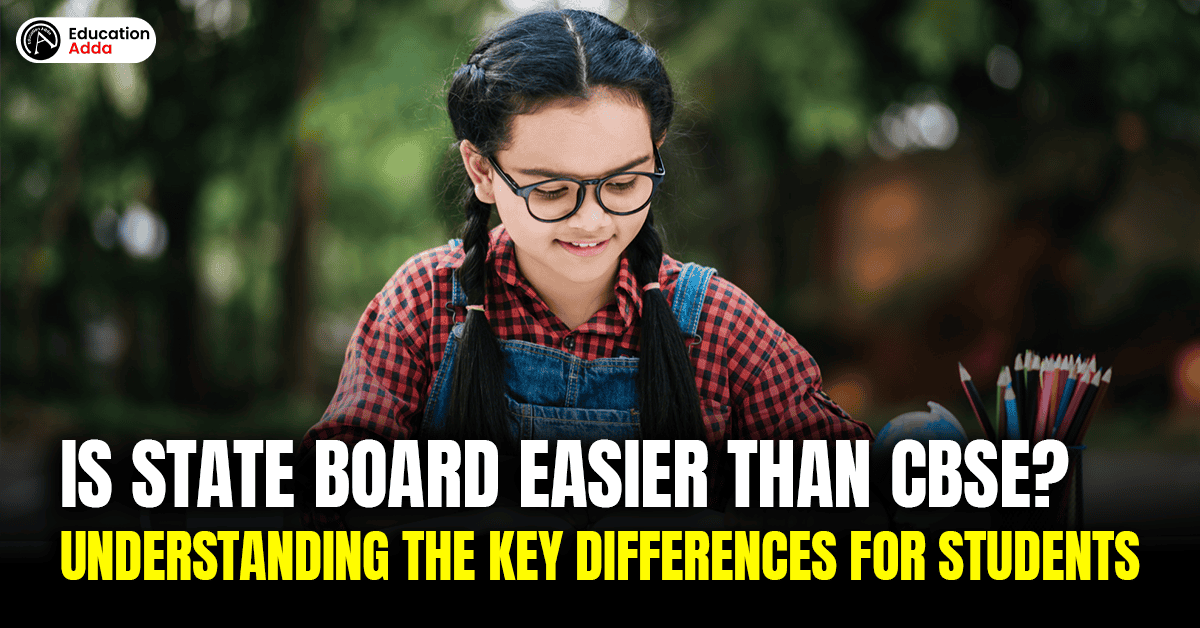
Choosing the right educational board is a crucial decision for students and parents in India. The Central Board of Secondary Education (CBSE) and various state boards are two of the most prominent educational systems in India. This article delves into the age-old debate: “Is State Board easier than CBSE?” We will explore their differences, the challenges of each board, and help you make an informed decision for your academic journey.

Table of Contents

What Is CBSE and What Makes It Different from State Boards?

The Central Board of Secondary Education (CBSE) is a national-level educational board in India, recognized by the Government of India. It provides a standardized curriculum across the country, with a focus on the holistic development of students. CBSE is often considered rigorous, with an emphasis on critical thinking, analytical skills, and a uniform approach across all regions.

On the other hand, State Boards (like Maharashtra State Board, Tamil Nadu State Board, etc.) are state-level boards that cater to specific states in India. These boards follow their own set curriculum, which can vary from state to state. As a result, students in state boards may face a slightly different learning experience, often tailored to the local context and language.

Differences Between CBSE and State Boards:

  • Curriculum Design: CBSE follows a more extensive syllabus compared to most state boards. While state boards may offer a more localized syllabus, CBSE ensures a more uniform approach that benefits students across India and abroad.

  • Language of Instruction: State boards often provide instruction in regional languages, while CBSE mandates English as the medium of instruction.

  • Standardization: CBSE offers standardized exams and a national ranking system, while state boards typically assess students based on regional guidelines.

Is State Board Easier Than CBSE? Analyzing the Syllabus and Exam Patterns

Exam Difficulty and Evaluation System

One of the biggest differences between CBSE and state boards is the exam pattern and difficulty. While both boards assess students in theory and practical exams, CBSE exams are often seen as more concept-based, encouraging critical thinking and application of knowledge. State boards, in contrast, can be more rote-based, focusing on memorization and understanding local contexts.

For example, CBSE exams emphasize multiple-choice questions (MCQs), short answers, and long-form essays. This prepares students for competitive exams like JEE and NEET, which require analytical and application skills. State board exams, on the other hand, may have a more straightforward structure with a stronger focus on theoretical knowledge.

Syllabus Content

CBSE provides a detailed and in-depth syllabus, often introducing higher-order thinking concepts that challenge students. This can be a double-edged sword; while it prepares students well for competitive exams and future academic pursuits, it can also make the curriculum feel more demanding.

In comparison, state board syllabuses can vary significantly between states. Some state boards may offer a more localized curriculum, making it easier for students to understand concepts that are closer to their environment. However, this may lack the rigor needed to compete at the national level in exams like JEE or NEET.

Advantages and Disadvantages of CBSE vs State Board

Advantages of CBSE

  • National Uniformity: CBSE provides a uniform syllabus and examination structure across India, making it a better choice for students who may need to move across states during their academic journey.

  • Better Preparation for Competitive Exams: The CBSE syllabus is designed to prepare students for highly competitive exams like JEE and NEET. Its focus on critical thinking and problem-solving skills makes it ideal for students interested in science, technology, engineering, and medicine.

  • International Recognition: CBSE is internationally recognized, making it easier for students to apply to universities abroad.

Advantages of State Boards

  • Localized Curriculum: State boards focus on the regional context, which can be advantageous for students in terms of cultural relevance and understanding local issues.

  • Less Pressure: State board exams are often seen as less demanding than CBSE exams. This could be beneficial for students who may not wish to pursue highly competitive fields.

  • Affordability: State board schools are generally more affordable than CBSE schools, making education accessible to a broader demographic.

Disadvantages of CBSE and State Boards

While CBSE offers a more comprehensive education, it can sometimes be more difficult due to the focus on higher-order concepts. This could be challenging for students who struggle with abstract thinking.

On the other hand, state boards may offer a more basic education in comparison. Students may find themselves at a disadvantage when applying for national-level exams or seeking opportunities outside of their state.

Which Board is Better for Competitive Exams? CBSE vs State Board

When it comes to preparing for competitive exams like JEE, NEET, and AIIMS, CBSE is generally considered the better option. Its syllabus and exam pattern are aligned with the requirements of these exams. The CBSE board’s focus on conceptual understanding and problem-solving skills prepares students to tackle complex questions in these competitive exams.

State boards, although they provide a good foundation, may not offer the same level of preparation for these exams. However, students from state boards can still perform well if they supplement their education with additional coaching and self-study for JEE and NEET.

Why Is CBSE Often Considered Better Than State Board?

The National Scope of CBSE Education

CBSE is more uniform and standardized, ensuring that students across India have access to similar educational opportunities. This national recognition makes it easier for students to move between states without disrupting their studies. Moreover, the CBSE system is integrated with various online learning platforms, which has been a significant advantage during the pandemic.

Focus on Holistic Development

CBSE’s emphasis on co-curricular activities like sports, arts, and life skills helps students in their overall development, preparing them not just for exams but for a successful career ahead. This holistic approach is something that many state boards may lack.

Conclusion: Which Board Should You Choose? CBSE vs State Board

Choosing between CBSE and state boards depends on a variety of factors. If you’re aiming for national-level exams, CBSE is undoubtedly a better choice. However, if you prefer a more localized education system and a potentially less stressful environment, a state board might be the way to go.

Bullet-Point Summary

  • CBSE is better for students aiming for JEE, NEET, and other competitive exams.

  • State Boards may be easier and more affordable but lack the rigor required for national-level exams.

  • Choose the board that best suits your child’s learning style, academic goals, and future career plans.

FAQ Section

Which board is better for JEE and NEET?

CBSE is better suited for JEE and NEET preparation due to its syllabus alignment.

Generally, state boards have a more localized curriculum, making them slightly easier in terms of academic rigor.

Yes, switching is possible but requires careful planning and alignment of the syllabus.

No tags found

Leave a Reply

Your email address will not be published. Required fields are marked *

Related Posts

Education Adda: The Leader in AMU/JMI Coaching. For three consecutive years, we’ve delivered exceptional results, making us the most trusted choice for aspiring medical and engineering students.

Our Newsletter